The Sustainability Approach of IPD
How both trading partners benefit
By promoting imports, the IPD creates new procurement and sales markets. Global trade benefits both buyers and producers. Importers discover the potential in IPD partner countries, while producers take their first steps into the European market. Both sides also benefit from sustainable business practices: they profit from reconciling their economic interests with environmental and social concerns.
For both sides, the protection of natural resources is the basis for long-term business relationships. This awareness is high among both importers who use IPD services and producers in the IPD programme.
The aim of the IPD is to balance economic growth, the protection of natural resources and social aspects of sustainability, such as supporting people in mostly rural regions. As a member of the ‘Partners in Transformation – Business & Development Network’, the IPD supports the German Federal Ministry for Economic Cooperation and Development's strategy of promoting socio-ecological economic transformation in partner countries.
In this interview, Tabea Mack, Head of Sourcing and Markets at IPD in Bonn, presents IPD's approach to sustainability. She explains how importers can use IPD services to meet environmental and social criteria and highlights the advantages of sustainable supply chains for producers in global competition. She also describes how the IPD prepares producers for the needs of importers through training courses.

How important is sustainability to the IPD?
Sustainability is of central importance to the IPD – both as a development policy project as well as an initiative to promote imports.
Regarding our partner countries, sustainable trade and economic activity have a positive impact on natural resources and working conditions on the ground.
As an initiative to promote imports, we support European companies by carefully pre-selecting potential trading partners. Compliance with social and environmental criteria and ESG (environmental, social and governance) requirements are essential requirements of the European market.
What are the IPD's main areas of focus?
At IPD, we take a comprehensive approach that encompasses all three aspects of sustainability.
It goes without saying, we strive to ensure that our work is economically sustainable – for import companies in Europe and producers in our partner countries alike.
A prerequisite for this is that IPD companies also meet environmental and social sustainability requirements and the European market's demand for sustainable procurement. We support IPD companies in their commitment to protecting natural resources and supporting local people – in the company or in the community.
In our training and coaching sessions, we demonstrate how relevant ESG criteria and transparent supply chains are for gaining a lasting foothold in the European market. The results of the workshops and individual consultations are an ESG scan and an ESG action plan, in which companies evaluate their existing measures and plan adjustments and additions.
How do importers benefit from the IPD's sustainability approach?

Importers face major challenges: consumer demands and increasing legal requirements at various levels are putting European importers under increasing pressure to review their supply chains in terms of sustainability. The need for greater stability and resilience has also grown in light of geopolitical challenges and the consequences of climate change.
In short: sustainability and stability are in demand.
IPD companies have the great advantage of being familiar with the sustainability requirements of the European market and, in most cases, having already started the internal process. In IPD training and coaching sessions, they have defined action plans for meeting sustainability criteria, which they are implementing step by step. They document their status and progress. This documentation provides a good overview and basis for cooperation with European importers. At the same time, the ongoing process allows for a direct contact person who can competently answer questions about sustainability status.
The companies in the IPD programme are therefore ready to tackle the challenges and develop sustainable supply chains together with European business partners. This is where the advantages of direct trade become apparent. Through personal exchange, both sides can agree on priorities and take individual criteria into account
By jointly developing the sustainability catalogue, the partners are creating a basis for sustainable trade and economic stability – for both sides.
How does the IPD support companies in the IPD programme in meeting the sustainability requirements of the EU market?

We introduced ESG training several years ago. Our approach is to highlight the fundamental importance of responsible corporate behaviour and provide a holistic understanding of sustainability.
In the training courses, we also provide companies with very specific information about the current legal framework and market requirements regarding environmental and social standards.
Environmental topics include, for example, the protection of soil and water resources, the circular economy model and the use of renewable energies, compliance with minimum social standards in the supply chain, diversity and inclusion.
Through our webinars and individual coaching sessions, companies learn to identify the most important starting points in their value chains. At the end of the training, an ESG action plan is created that is individually tailored to the company.
We see that there is a great demand for our ESG training courses. For many companies, ESG is already part of their culture – our training courses support them in strategically embedding it in their company.
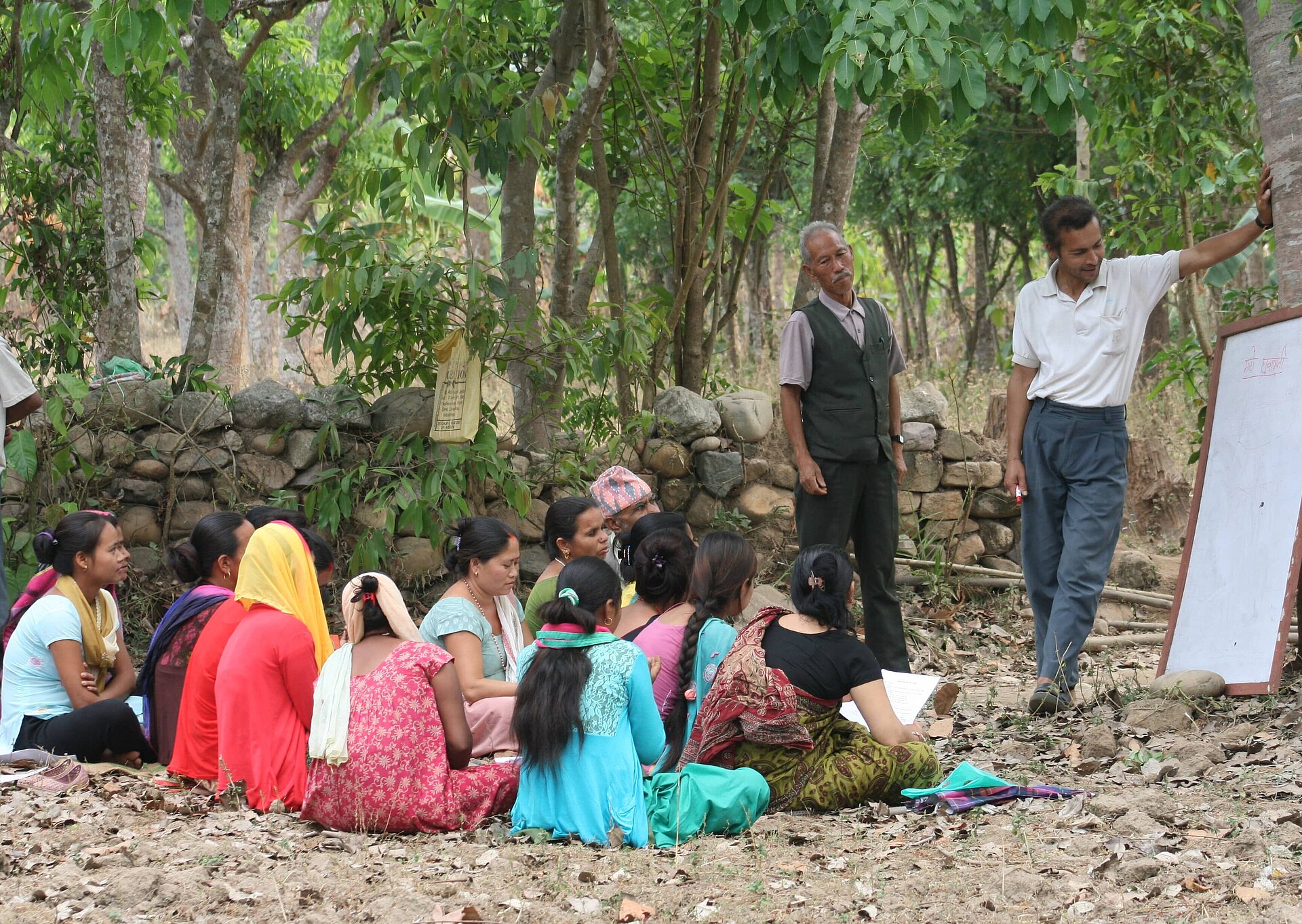
Our offering includes e-learning, group webinars and one-to-one coaching. There are digital training courses as well as face-to-face training courses in our partner countries. We also work closely with trade associations and export promotion organisations in our partner countries. They pass on ESG knowledge and awareness to their member companies, many companies are reached, change is initiated in the sectors.
How does the IPD support sustainability certification?
Fundamentally, it is evident that certifications are playing an increasingly important role in the European market. Requirements vary depending on the industry, and some industries require specific sustainability certifications.
In the natural ingredients and fresh fruit & vegetables sectors, for example, this is organic certification: although ‘organic’ remains a niche offering in the food sector as a whole, the organic label is a prerequisite in certain product groups. Organic products are in significantly higher demand than conventional products. We point out this potential to our companies in partner countries and support them in the certification process.
In the sustainable tourism sector, the Travelife and Tourcert certifications are the benchmark for sustainability. We therefore support companies in meeting the requirements of these official certifications. However, these very comprehensive systems are not suitable for all IPD companies. The IPD has therefore developed a sustainability scorecard. This enables companies to document their progress and provides European tour operators with an assessment tool.
Certifications are less common in other industries. There, the focus is more on concrete steps, such as the use of alternative energy sources and sustainable resource management. Here, the ESG Action Plan helps to document sustainability commitments and the current status of concrete measures.
The aspect of social sustainability in international trade relations is also an important issue that is growing in significance. We are already beginning to notice this in new regulations such as the Supply Chain Act. We encourage producers to identify their own country-, product- and company-specific risks and to translate these into action.
What arguments are there for IPD companies to invest in sustainability?
The protection of natural resources is a strongly held argument in rural regions. People treat nature responsibly because it feeds the people in the region. Fair cooperation and social commitment at the local level have already been practised by IPD companies for a long time. Many companies therefore already have a basic understanding of and belief in sustainability.
There are also economic arguments. Meeting the requirements of the European market is just one advantage. ESG commitment also helps small and medium-sized enterprises to stand out from the competition. ESG criteria are a distinguishing feature that facilitates access to the European market, but also justifies higher prices.

Furthermore, ESG training has been shown to have enormous potential for operational improvements. Companies review their status quo, professionalise structures, design more efficient processes and modernise technology. This minimises risks in their operational processes and strengthens their resilience.
So there can be no talk of an ‘investment’ in sustainability. Sustainability pays off for nature, people and trading partners.